Laetro
AI Style Representation Models + Guide for Artists
Overview
In this project, I was invited to be a founding member creative for Laetro CGS, an innovative AI image generation tool for Laetro artists and subscribers. This project focuses on leveraging my artistic expertise to create a series of AI style representation models derived from my own artwork.
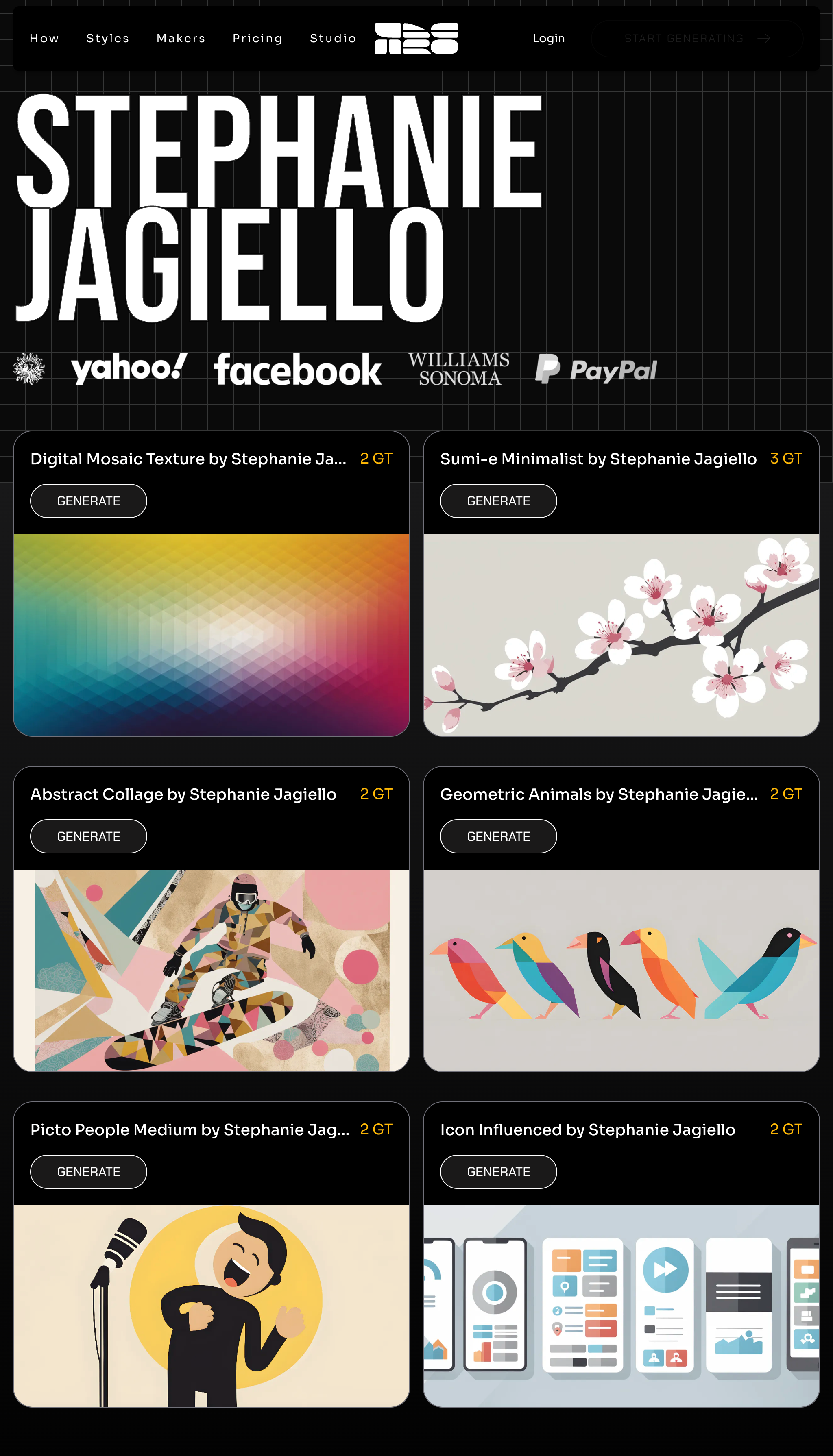
My style models are now available on the Laetro platform, empowering subscribers to incorporate my artistic styles into their own digital creations.
My Role
My role as a founding member was early open-ended experimentation.
What I Did
Onboarding and Learning: I familiarized myself with the CGS tool, grasping its technical specifications and image requirements.
Research and Design Approach: Through research on related benchmarks, I informed my design strategy for crafting the AI style models.
Dataset Creation: I curated multiple collections of my artwork, categorized by distinct artistic styles, and processed them into training datasets for the AI.
A. Simple Detail. I created simple detail dataset with vector style edges and uniform subject matter:
B. Complex Detail. I also created a more complex detail dataset to find repeatable behaviors from the base model and trained set:
AI Collaboration: Through prompt techniques, imagery selection, and iteration, I collaborated with AI to train the image datasets and refine them into unique AI art style representation models. I tested a wide range of prompts, character sheets, and latent styling language.
Style Model Development: I used latent style prompts and fine-tuning techniques to achieve optimal artistic expression within the AI style models.
Artist Guide
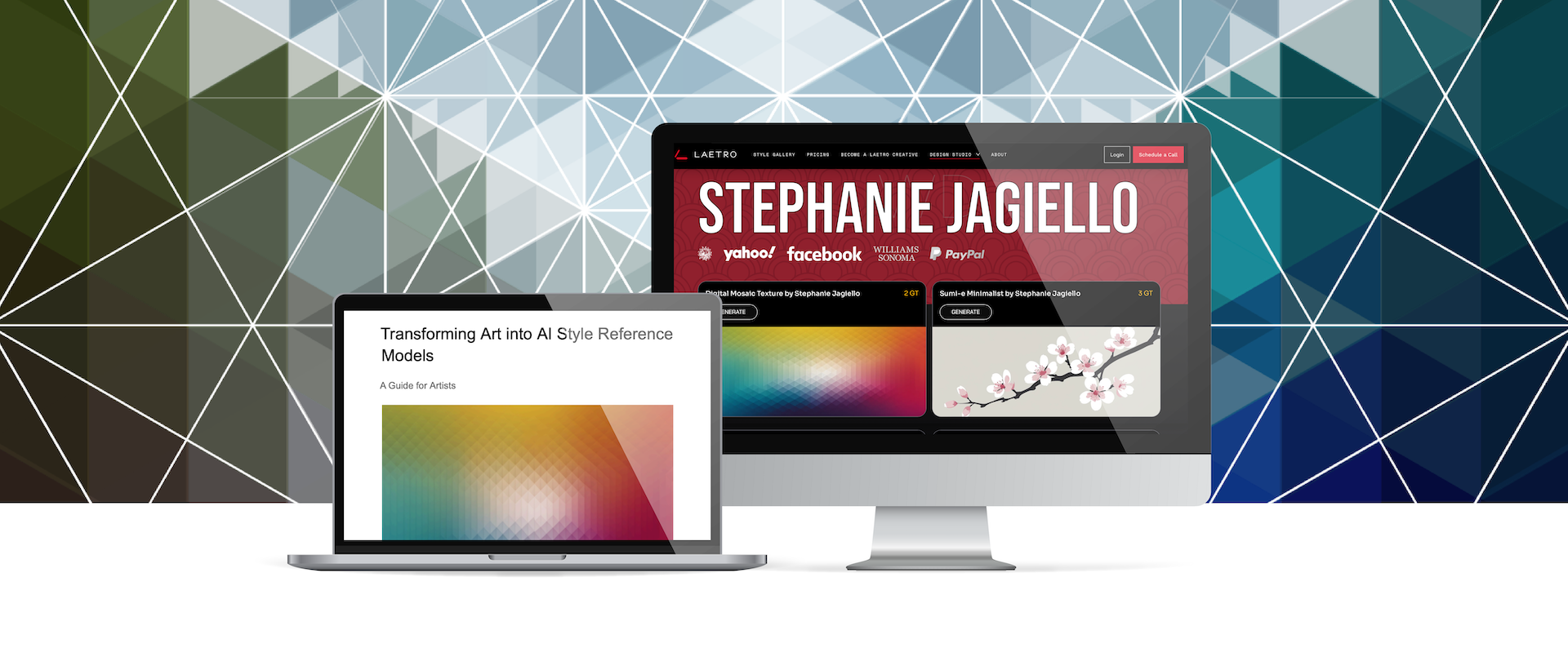
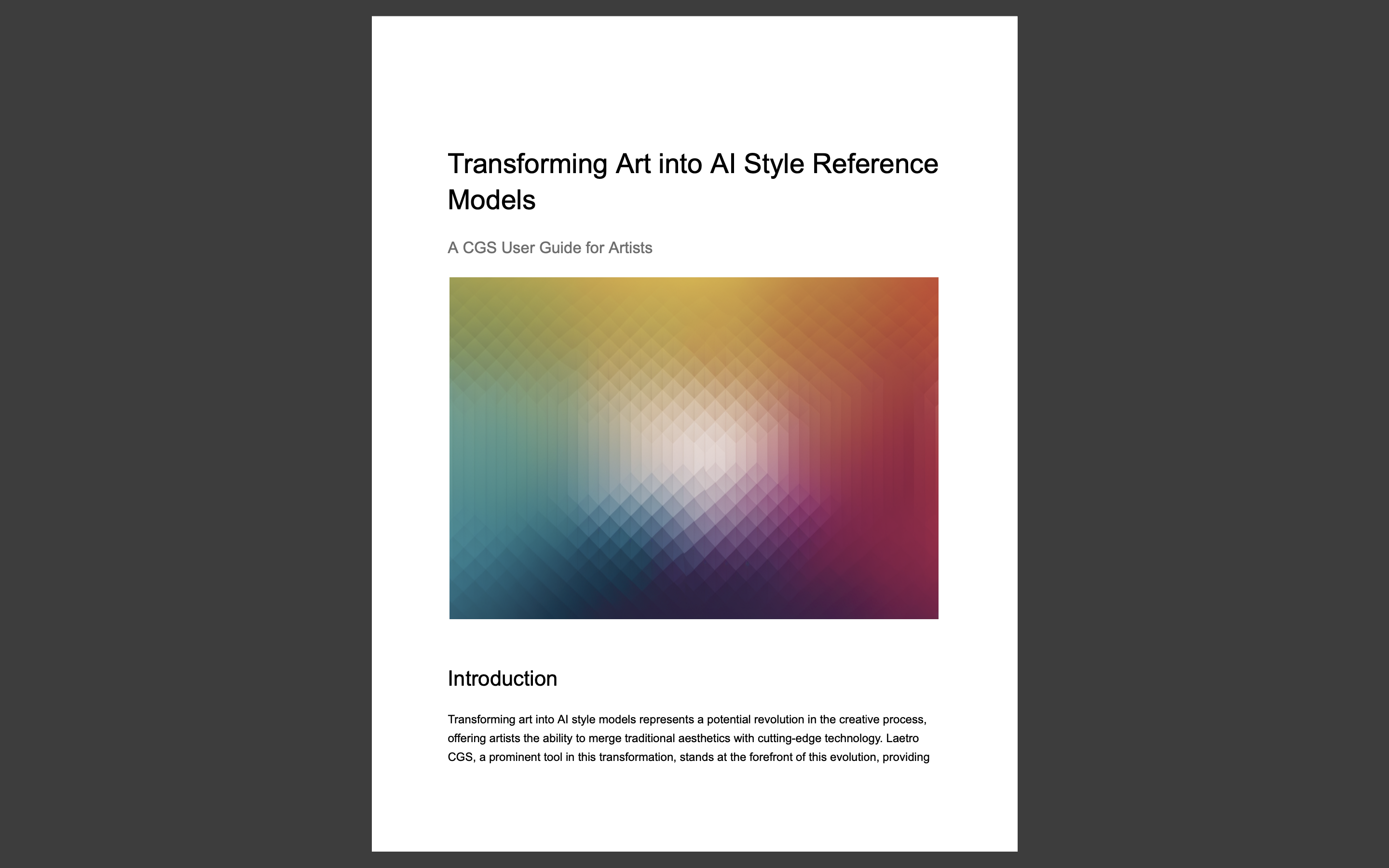
To share my learnings, I created a User Guide for Laetro CGS artists. Below is the guide preview followed by an excerpt of the core methodologies discussed.
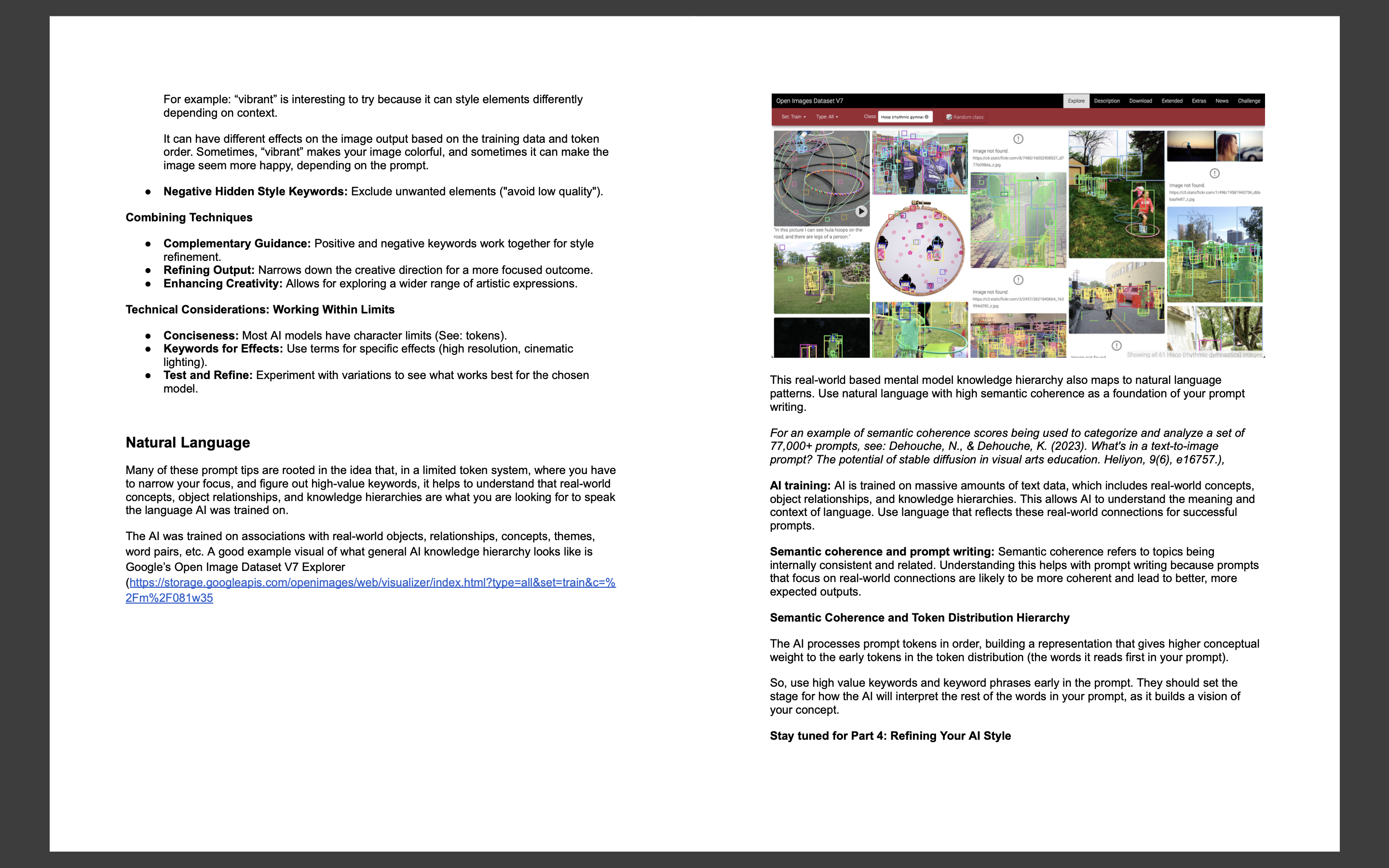
Dataset Curation: The quality of an AI style model is 80% dataset preparation. I recommend artists curate a "Gold Set" of 15–25 images that represent the extremes of their style. Avoid subject matter repetition unless you are training a specific character model; for general style, visual variety in the subjects ensures the AI learns the aesthetic rather than the object.
Latent Styling & Prompt Weights: During the training phase, I found that providing natural language "anchor tags" in the metadata helps the model associate specific textures (e.g., "sumi-e brush strokes," "matte collage edges") with latent weights. When prompting, start with style-dominant keywords before introducing the subject to ensure the AI's "first pass" is guided by the artistic system.
The Emulation vs. Collaboration Gap: AI is a collaborator, not a photocopier. The most successful models are those where the artist identifies the "system logic" of their own work—the rules of color, weight, and line—and allows the AI's base model to interpret those rules across new subjects.
Project Impact
- Empowering Creativity: My models allow subscribers to use my artistic language in their work.
- Rewarding Innovation: The platform rewards artists whenever their style models are utilized.
- Educational Contribution: My User Guide equips artists with the knowledge to leverage CGS effectively.
Available on Laetro